
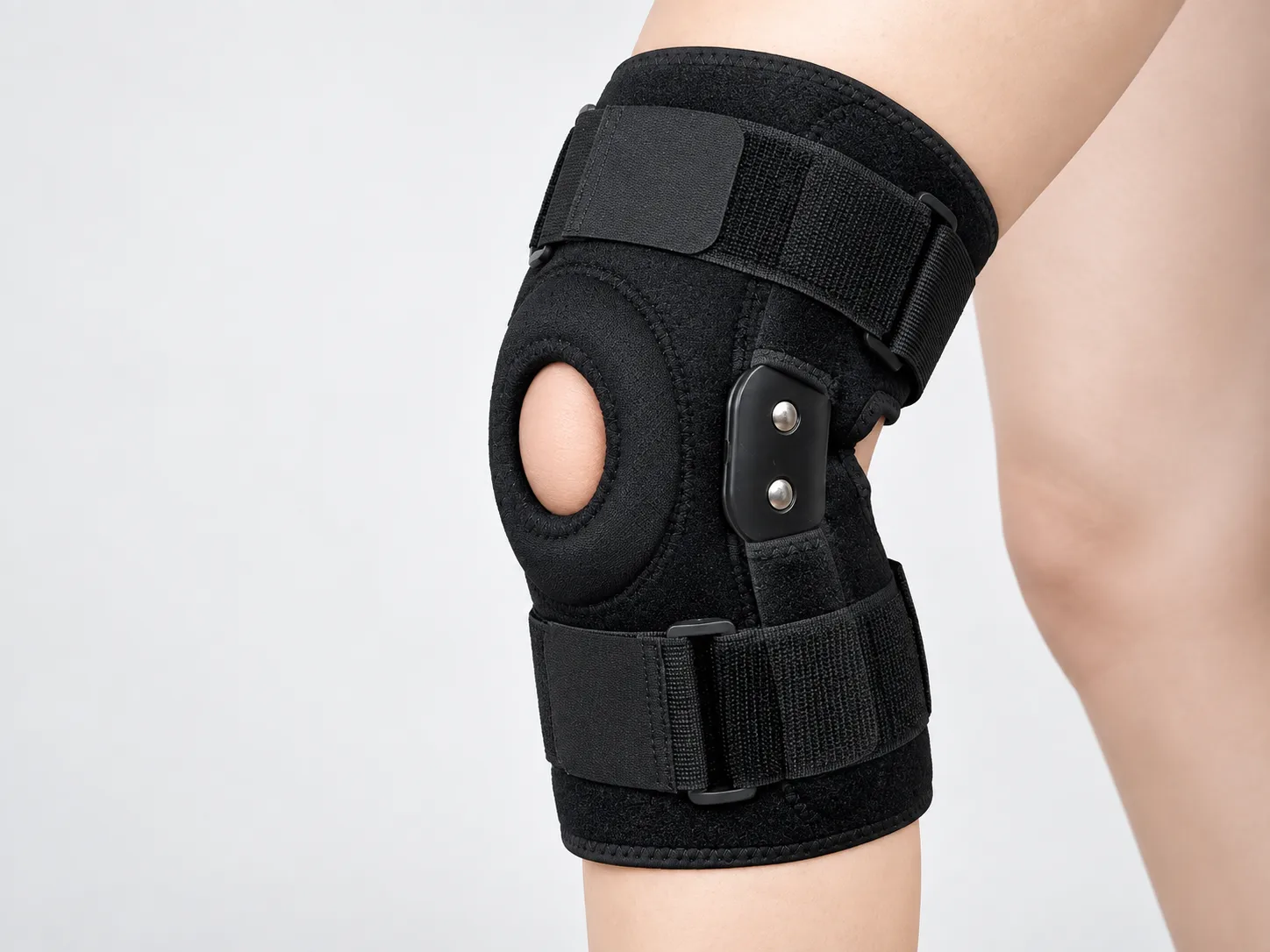
Choosing a knee brace or support starts with three questions: What support is needed, how will the product be used, and does it fit correctly? A compression sleeve, patellar strap and hinged brace serve different purposes. The most rigid option is not automatically the most suitable.
For sports brands, distributors and private label sellers, those same questions should guide product sourcing. A useful knee support range needs clear product differences, dependable sizing and specifications that match the intended customer.
This guide explains how to compare the main options and turn those differences into practical purchasing criteria.
Start with the Intended Use
Before comparing materials or prices, define the product’s purpose. Is the customer looking for flexible support during activity, targeted support around the kneecap, or a brace selected as part of injury recovery?
A knee sleeve provides elastic compression. A structured brace can provide additional stability or restrict movement, depending on its design. These products should not be presented as interchangeable. Cleveland Clinic explains the distinction between knee sleeves and braces.
For a B2B purchasing brief, record:
- Target customer: recreational athletes, fitness customers, everyday users or customers receiving professional care.
- Activity: running, gym training, walking or a defined rehabilitation setting.
- Required function: compression, adjustable support, kneecap support or controlled movement.
- Sales channel: sports retail, online private label, distribution or medical supply.
- Fitting support: self-selection from a size chart or assistance from a trained professional.
For individual users, new or worsening knee pain should be assessed before choosing a brace. Severe pain, worsening swelling, numbness or difficulty moving the leg also warrant medical attention. Cleveland Clinic’s knee brace guidance describes these warning signs.
Choose the Product Structure Before the Features
Use the following table to narrow the product category. It provides a starting point for product selection; an individual injury or postoperative requirement needs professional guidance.
| Product type | Main design purpose | What buyers should evaluate |
|---|---|---|
| Compression knee sleeve | Flexible compression with limited bulk | Stretch recovery, edge comfort, sizing and resistance to slipping |
| Adjustable wraparound support | Adjustable fit through straps or overlapping panels | Strap reach, closure security, coverage and ease of application |
| Patellar tendon strap | Localized support below the kneecap | Pad position, adjustment range and comfort during movement |
| Patella-stabilizing support | Support around the kneecap through a shaped pad, buttress or strap system | Positioning, construction and fitting instructions |
| Hinged knee brace | More structured support and control of unwanted movement | Hinge function, alignment, strap layout and intended use |
| Unloader knee brace | Redistribution of load away from an affected knee compartment | Clinical suitability, adjustment and fitting requirements |
| Postoperative brace or immobilizer | Restriction or control of movement during recovery | Prescribed movement limits, adjustment security and instructions |
Hinged, unloader and postoperative braces perform different jobs. A product suitable for instability is not automatically suitable for arthritis-related unloading or a particular surgical recovery plan. The Centers for Advanced Orthopaedics explains these functional differences.<!– IMAGE 1: Insert after “Choose the Product Structure Before the Features” | Visual: An original comparison diagram showing a compression sleeve, adjustable wraparound support, patellar strap and hinged brace, with their structural differences labeled | Alt: “Structural differences between knee sleeves, wraparound supports, patellar straps and hinged braces” | Source: original diagram –>
Look beyond “light,” “moderate” and “maximum” support
Ask suppliers to explain what creates the stated support: fabric construction, flexible stays, hinges, straps or a combination of components. Compare those details alongside the intended use.
Likewise, an open-patella design describes an opening around the kneecap. That feature alone does not tell you how much stability the complete product provides. Review the surrounding pad, side supports and closure system as well.
Match Materials to the Wearing Experience
Material selection should follow the intended activity and customer expectations. Start with the desired wearing experience, then evaluate samples against it.
Braces for Sports works with materials including neoprene, nylon, polyester, spandex, gel and breathable mesh. These provide options for developing different product constructions, but the finished sample should determine the purchasing decision.
| Material or construction | Questions to ask during sample evaluation |
|---|---|
| Neoprene-based support | Is the thickness suitable? How does the product feel during extended wear? Are the edges and seams comfortable? |
| Nylon or polyester with spandex | Does the fabric recover after stretching? Is the fit consistent across the size range? |
| Knitted construction | Do shaped areas align with the knee? Does the fabric bunch behind the joint? |
| Mesh panels | Are they positioned where ventilation is needed? Do the panel connections remain comfortable? |
| Gel or shaped pads | Does the pad remain correctly positioned during movement? Is its edge noticeable against the skin? |
| Straps and closures | Can users adjust them easily? Do the closures remain secure after repeated opening and fastening? |
Avoid selecting a product from fabric names alone. Two supports with similar material descriptions may feel different because of their thickness, knit structure, lining, seams and overall shape.
For OEM/ODM projects, agree on the material composition and construction before approving colors, logos and packaging. This gives both parties a stable specification for sample revisions and production.
Make Sizing Easy to Understand
A good size chart should help customers choose confidently and help your team explain the fit consistently.
Request a product-specific measurement guide showing:
- The exact measurement locations.
- Whether the leg should be straight or bent.
- Measurements in centimeters and inches.
- The body-measurement range for each size.
- Instructions for customers between sizes.
- Left/right orientation, where relevant.
Use the measurement method specified for that model. Do not transfer a size chart from a different sleeve or brace simply because both products use labels such as S, M and L.
For adjustable designs, ask for the usable fitting range. Check that the straps still engage properly at both ends of that range.
During fitting, the product should feel secure without painful pressure. Sliding, bunching, tingling, numbness or increased swelling can indicate a fitting problem. The Centers for Advanced Orthopaedics’ fitting guidance identifies these signs.<!– IMAGE 2: Insert after “Make Sizing Easy to Understand” | Visual: A product-specific measurement diagram showing the exact measurement points required for the selected knee support, paired with its corresponding size chart | Alt: “Measurement locations and size chart for selecting a knee support” | Source: original diagram –>
Evaluate Samples in the Intended Activity
An appearance check is only the first stage of sample approval. Also assess how the product behaves when worn for its intended purpose.
For a sports support, include appropriate walking, bending and repeated movement in the evaluation. For a medical brace, use an evaluation process suitable for its intended use, with qualified input where needed.
A practical sample review should cover five areas:
- Application: Can the user identify the correct orientation and put it on using the supplied instructions?
- Fit: Does the sleeve, pad or hinge remain in the intended position?
- Comfort: Are there pressure points, rough seams or bunching behind the knee?
- Adjustment: Are straps accessible, and do they offer enough adjustment without excessive loose ends?
- Care and durability: After the agreed care and repeated-use checks, are dimensions, closures, seams and appearance acceptable?
Agree on test methods and acceptance criteria before comparing samples. Record the results against each model and size, rather than relying on a single overall impression.
Keep an approved reference sample and a written specification. If materials, dimensions or components change, review the affected features again.
Define Customization Before Requesting a Final Quote
For a private label knee support, customization involves more than adding a logo. Changes to dimensions, fabrics, pads or straps can alter the product’s fit and require another sample review.
Braces for Sports supports OEM/ODM development, including logo application, packaging, colors, sizes, material adjustments, sampling and design revisions. Use these options to answer a specific customer need.
For example:
- A sports brand may prioritize a compact design, distinctive colors and clear activity positioning.
- An online seller may need especially clear sizing graphics and application instructions.
- A distributor may prioritize consistent specifications, packaging identification and dependable replenishment.
- A medical supply buyer may need more detailed product documentation and fitting information.
Send one coordinated brief covering the product, packaging and intended market. This helps avoid approving a sample whose final packaging describes a different use or fitting method.
Compare the Complete Purchase Cost
Compare quotations on the same basis. A lower unit price may exclude packaging, development work or other items included in a competing offer.
Ask each supplier to specify:
- Price by model, size and order quantity.
- MOQ by product, color and customization option.
- Sample charges and revision arrangements.
- Tooling or development charges, where applicable.
- Packaging and instruction costs.
- Production timing following sample approval.
- Shipping terms and carton details.
- Arrangements for defects and specification changes.
Braces for Sports offers flexible MOQ options. Discuss the quantity alongside your size mix, customization requirements and replenishment plan so the quotation reflects the actual order.
For destination-market documentation, request records relevant to the exact product, intended use and labeling. Review the product names and scope covered by each document before finalizing packaging or purchasing commitments.
Keep Product Descriptions Specific
A clear product page should explain what the support does, how it fits and who it is intended for.
Describe observable features such as adjustable straps, a knitted body, mesh panels or side hinges. Connect each feature to a practical selection question without presenting every model as suitable for every knee condition.
A support can also be one part of a broader care plan. Mayo Clinic Health System emphasizes that brace selection depends on the situation and that knee injuries may require guidance from a clinician.
For your range, give each model a distinct purpose. Customers should be able to understand why they would choose one product over another without relying only on price or appearance.<!– IMAGE 3: Insert after “Keep Product Descriptions Specific” | Visual: A side-by-side sample evaluation showing fabric, seams, straps, a size label and packaging instructions, with a short purchasing checklist | Alt: “Knee support sample inspection covering construction, sizing, closures and packaging” | Source: company photo –>
Final Knee Support Purchasing Checklist
Before placing an order, confirm that:
- The intended customer and use are clearly defined.
- The structure provides the required type of support.
- Materials and construction match the approved sample.
- The size chart uses the correct measurement method.
- Samples across the planned size range have been reviewed.
- Application and care instructions are clear.
- Customization and packaging details are approved.
- Relevant product documentation has been reviewed.
- MOQ, pricing, production timing and shipping terms are agreed.
The right knee brace or support is the product that matches its intended purpose, fits reliably and can be supplied consistently.
Developing a knee support range for your brand or distribution business? Contact Braces for Sports with your target market, intended use, preferred construction, size range and estimated quantity to discuss suitable products, OEM/ODM customization, samples and a quotation.