
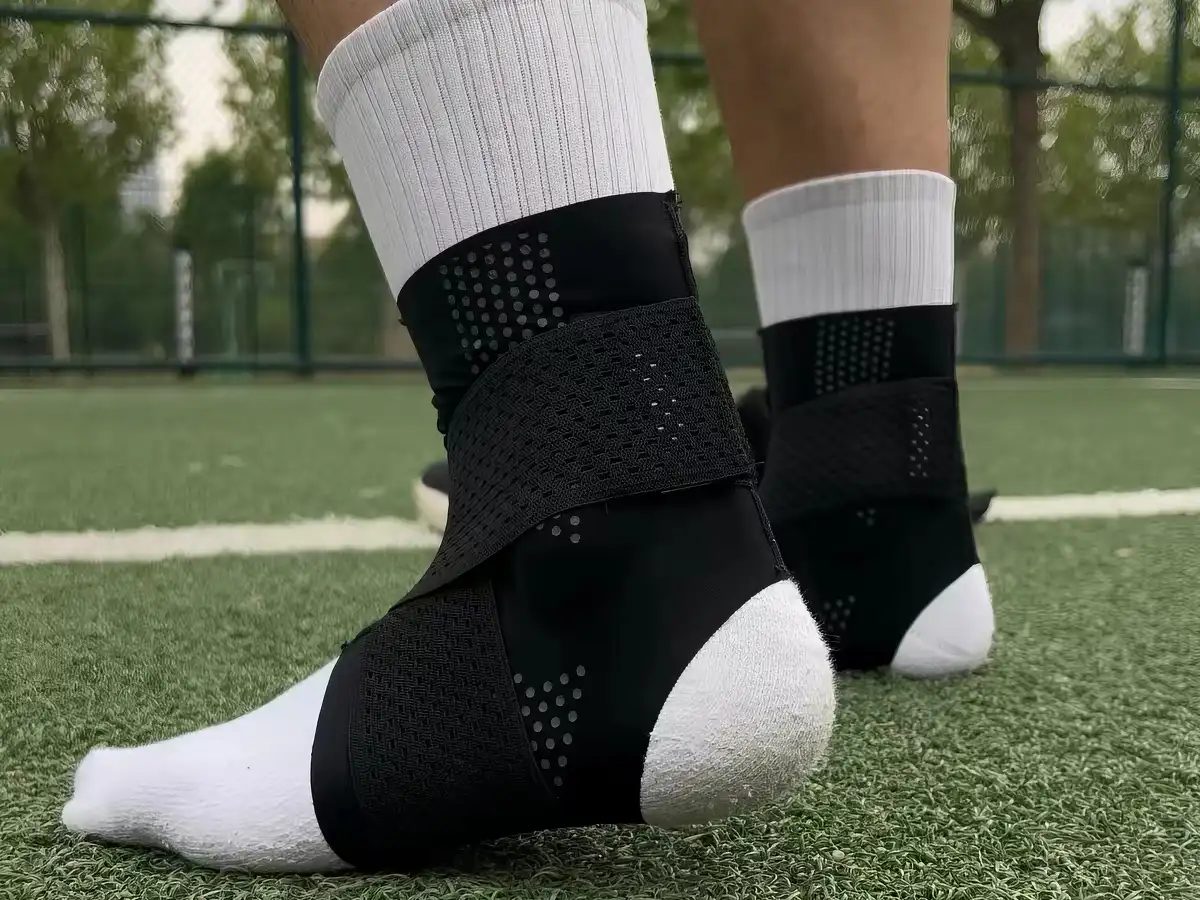
Compression sleeves, adjustable wraps, lace-up braces, and stirrup braces serve different needs. A sleeve suits buyers prioritizing light compression and flexibility. A wrap adds adjustable tension. Lace-up and structured braces provide more mechanical support, with greater demands on fitting and shoe space.
For sports brands, distributors, and private-label buyers, the useful comparison goes beyond “light, medium, or strong.” Construction, fastening, sizing, and intended use determine how a brace fits into a product range—and how clearly customers can understand it.
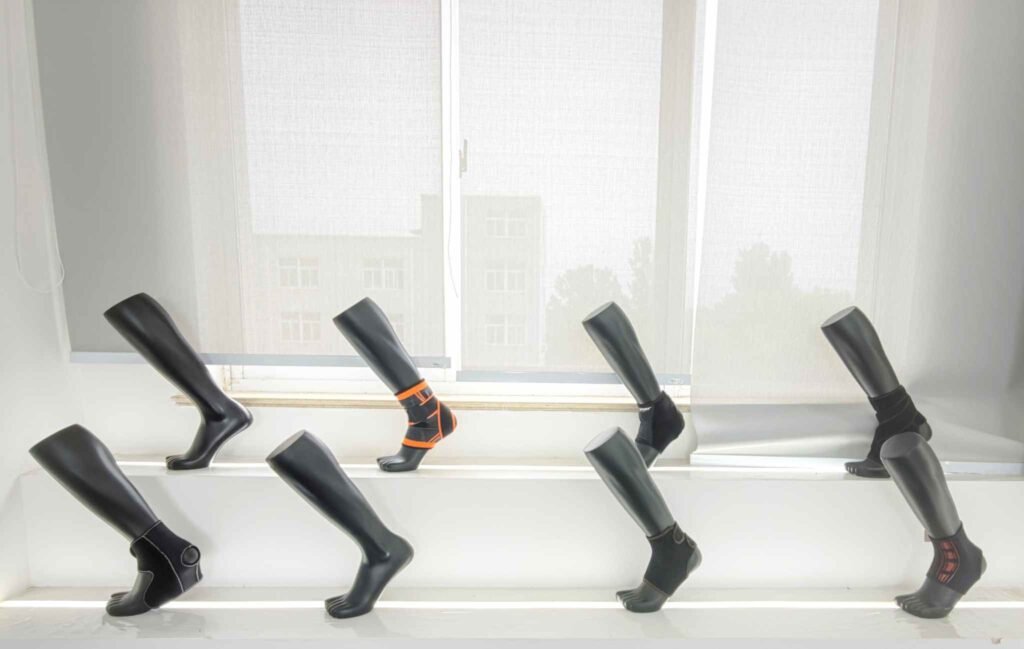
Ankle Brace Types Compared at a Glance
The table compares common constructions. Actual support depends on the complete design, including fabric stiffness, strap placement, reinforcement, and fit.
| Type | Main construction | Main advantage | Main trade-off | Key sample check |
|---|---|---|---|---|
| Compression ankle sleeve | Stretch knit or soft neoprene body | Flexible, relatively simple to wear | Limited mechanical control without reinforcement | Size consistency, edge comfort, and slipping |
| Figure-8 ankle wrap | Elastic strap crossing around the foot and ankle | Adjustable tension | Results depend on correct wrapping | Strap reach, overlap, and fastening security |
| Lace-up ankle brace | Fabric body with laces; optional straps and stays | Adjustable enclosure around the ankle | More steps to put on and adjust | Eyelets, tongue position, and shoe fit |
| Stirrup ankle brace | Side shells connected beneath the heel, with cushioning | Structured resistance to sideways movement | Shell and padding require careful fitting | Heel adjustment, shell edges, and pad placement |
| Hinged ankle brace | Supporting frame with an articulated joint | Designed to control selected movements while allowing others | More complex construction and fitting | Hinge alignment and permitted motion |
Soft, semi-rigid, and rigid are broad descriptions rather than a universal rating system. MUSC Health distinguishes these categories and notes that lace-up designs may include additional side supports and straps. MUSC Health’s ankle brace overview.
Compression Sleeves vs. Adjustable Ankle Wraps
Compression sleeves: a simple fit with fewer adjustments
A compression ankle sleeve uses an elastic body to apply pressure around the ankle. Knit options may incorporate mesh zones or cushioning pads; neoprene versions provide a different balance of stretch, thickness, and warmth.
The main purchasing distinction is sizing. A pull-on sleeve has limited adjustment once worn, so its measurement chart and stretch characteristics matter. A loose sleeve may migrate, while an overly tight edge can become uncomfortable.
Gel pads should be assessed as a cushioning feature. Their location, shape, and thickness affect how the sleeve feels inside footwear; they do not automatically provide the mechanical restraint of a shell or side stay.
Figure-8 wraps: more adjustment, more dependence on application
An elastic figure-8 wrap crosses around the foot and ankle and secures with a hook-and-loop closure. The wearer can adjust tension instead of relying entirely on the stretch of a fixed-size body.
For sourcing, inspect the usable fastening area, strap length, and fit at both ends of the stated size range. A wrap that closes comfortably on a small ankle may have insufficient overlap on a larger one.
Choose a sleeve when simple pull-on wear is the priority. Choose a wrap when adjustable tension is central to the product brief. A figure-8 strap can also be part of a lace-up brace, so the strap pattern alone does not define the support category.
Lace-Up Braces vs. Stirrup Braces
Lace-up braces: adjustable fabric enclosure
Lace-up braces surround the ankle with a fabric body tightened through eyelets. Some add crossing straps or side stays. These components should be specified individually: two products described as “lace-up ankle braces” can have substantially different construction.
Useful sample checks include whether the tongue stays centered, whether laces slide smoothly, and whether reinforcement presses against the ankle bones. Evaluate the brace inside the intended footwear, with the socks customers are likely to use.
For a sports-oriented range, the practical appeal is the combination of adjustable fit and optional reinforcement. The trade-off is application time, especially when laces and multiple straps must be fastened.
Stirrup braces: support built around side shells
Stirrup braces use shaped supports along the sides of the ankle, usually connected beneath the heel. Foam, air, or gel cushioning provides the interface between the shell and the wearer. These designs emphasize resistance to sideways ankle movement. DonJoy’s explanation of stirrup construction.
When comparing samples, look beyond padding names. Assess shell contour, heel-strap adjustment, liner attachment, and pressure at the shell edges. For an air-cushioned model, include bladder integrity in the inspection requirements.
Compare lace-up and stirrup options through fit and intended motion control. Neither the number of straps nor the presence of a hard shell establishes that one model is the right choice for every wearer.
How Hinged Braces Differ from Walking Boots
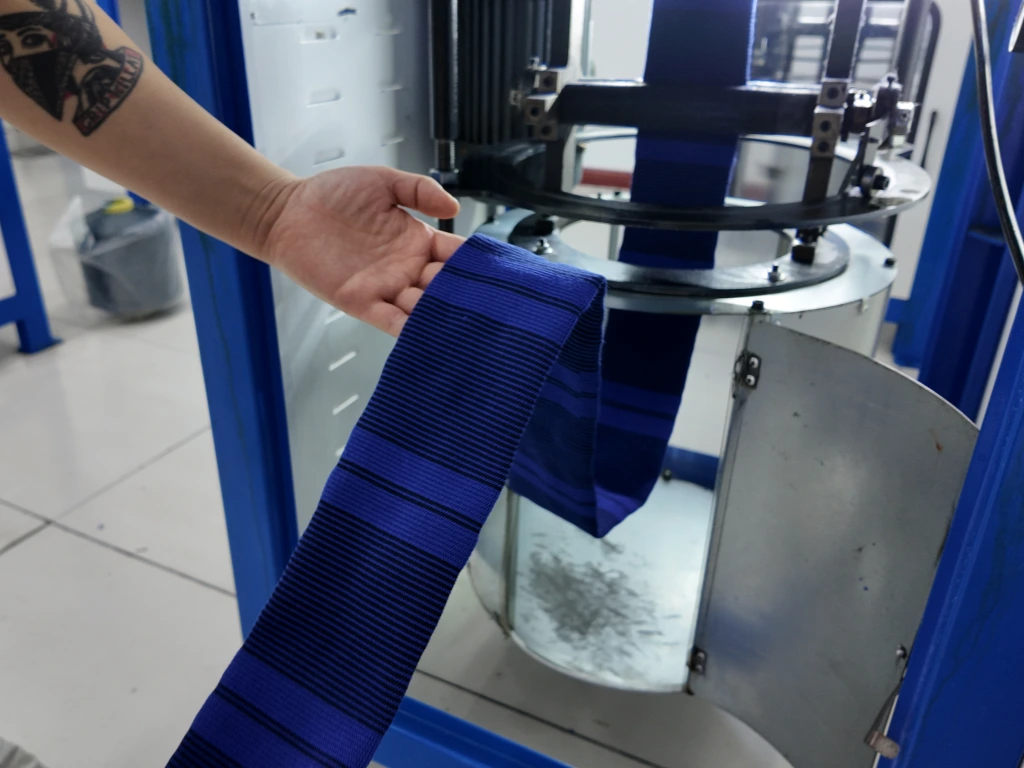
A hinged ankle brace combines a supporting structure with an articulated connection. Its purpose is to permit selected movement while restricting other movement; the available range depends on the specific design.
A walking boot serves a different role. It incorporates the foot and lower leg into a larger protective device and may be prescribed when immobilization is needed. A functional hinged brace and a walking boot are therefore not interchangeable steps on a simple support scale.
The American Academy of Orthopaedic Surgeons describes immobilization, rehabilitation, and return to activity as parts of ankle-sprain treatment. Device choice and progression depend on the injury and clinical assessment. A brace does not replace strength and balance rehabilitation. AAOS guidance on sprained ankles.
For a product catalog, keep functional sports braces and immobilization devices clearly distinguished. Avoid assigning a fixed injury grade or recovery timeline to every product in a construction category.
Where Do Dial Closures, Copper Fabric, and Neoprene Fit?
These features can help differentiate products, but they describe different aspects of a brace.
| Feature | What it describes | What buyers should compare |
|---|---|---|
| Dial adjustment | The fastening mechanism | Tightening, release, cable routing, durability, and repair options |
| Copper-containing fabric | A material characteristic | Composition and evidence supporting any advertised performance |
| Neoprene | A material used in sleeves, wraps, and other constructions | Thickness, stretch, lining, perforation, and wearing comfort |
| Gel padding | A cushioning component | Position, thickness, attachment, and pressure inside footwear |
A dial closure changes how tension is adjusted. The brace’s body, straps, stays, and shell still determine its structural support. Specify the actual closure system in purchasing documents; branded components require the corresponding sourcing and branding authorization.
Likewise, compare copper-containing sleeves with other sleeves of similar construction. Material content alone is insufficient grounds for promising improved healing or inflammation relief.
For knit and neoprene products, assess the finished construction rather than choosing from the material name alone. McDavid identifies material and fit as key comfort considerations, including the heat retention of neoprene and the ventilation advantages of suitable fabric designs. McDavid’s ankle brace buying guide.
Match the Product Range to the Buyer’s Application
A useful assortment gives each model a clear purpose.
| Product brief | Options to evaluate | Main selection question |
|---|---|---|
| Everyday compression range | Knit sleeves and padded sleeve variants | Does each size remain comfortable and correctly positioned? |
| Adjustable soft-support range | Figure-8 wraps and wraparound constructions | Can users reproduce the intended fit from the instructions? |
| Court-sport support range | Lace-up and reinforced functional braces | Does the complete brace fit securely inside the target footwear? |
| Rehabilitation supply range | Stirrup and other structured braces | Does the specific model meet the intended clinical requirements? |
| Range emphasizing easier adjustment | Suitable braces with dial closures | Can intended users tighten and release the mechanism reliably? |
Footwear deserves its own assessment. Test samples in the intended shoe styles rather than assuming that every “low-profile” brace fits equally well. Fit, comfort, activity, and materials are also central considerations in Zamst’s selection guidance.
What to Confirm Before Ordering Ankle Braces in Bulk
Turn the comparison into an agreed specification before approving production:
- Construction: Body material, straps, stays, shell, padding, and fastening system.
- Sizing: Measurement method, size chart, adjustment range, and left/right configuration.
- Wear testing: Slipping, edge pressure, fastening access, and compatibility with intended footwear.
- Durability: Appropriate checks for seams, eyelets, closures, elastic recovery, and any mechanical components.
- Customization: Logo method, color references, labels, packaging, and care instructions.
- Commercial terms: Sample approval, minimum order by variant, production lead time, and component replacement arrangements.
Compare quotations against the same specification. A lower unit price may reflect different reinforcement, padding, packaging, or component quality. Request separate pricing for meaningful options so their cost and benefit remain visible.
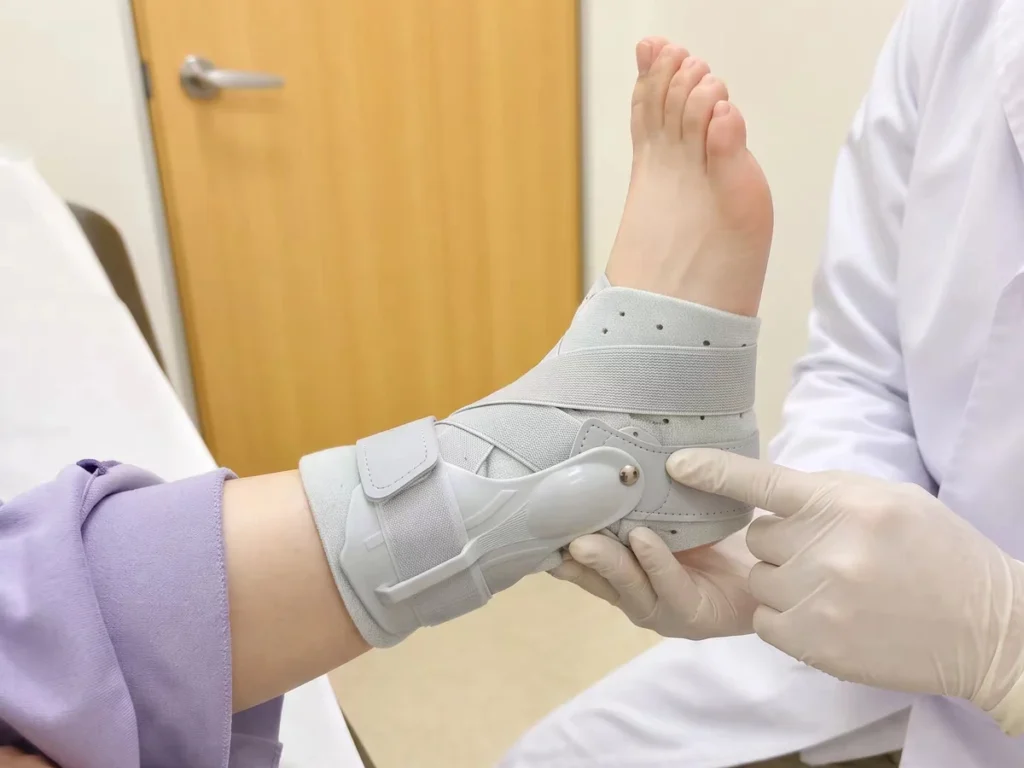
Discuss the Right Ankle Brace for Your Product Range
Start with the wearer, intended activity, and required construction. Then compare samples for fit, adjustment, footwear compatibility, and production consistency.
Share your target market, preferred brace type, size range, expected order quantity, and branding requirements to discuss suitable ankle support options and a sample brief.