
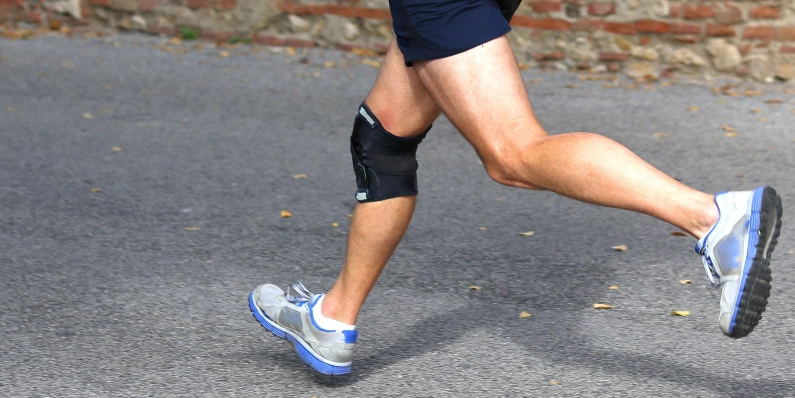
The best knee support for running depends on the support you need. A flexible compression sleeve, a padded knee support and a patellar tendon strap offer different constructions and wearing experiences. Choosing between them starts with understanding the purpose of the product and checking its fit.
This shortlist compares four options by design and intended use. It covers products relevant to runners, with additional purchasing considerations for sports brands, distributors and private label businesses.
Selection approach: Products are grouped by support type, not ranked from first to last. The comparisons use manufacturer descriptions and published specifications; they are not results from our own running tests. Regional availability and sizing may differ.
Running Knee Supports at a Glance
| Product | Design | Why consider it? | Main selection consideration |
|---|---|---|---|
| Bauerfeind Sports Compression Knee Support | Lightweight knitted sleeve | A simple construction for runners seeking compression with little bulk | Check the size-specific fit and upper-edge comfort |
| Bauerfeind Sports Knee Support | Knitted support with a shaped kneecap pad | A more detailed construction for runners considering a padded support | Check pad alignment and comfort through repeated knee bending |
| McDavid Knee Strap/Patella | Adjustable strap with a tubular buttress | Targeted support below the kneecap with limited coverage | Appropriate positioning and current size availability |
| Mueller Jumper’s Knee Strap | Adjustable strap with a tubular insert | Another compact option for localized support | Fit range and the manufacturer’s neoprene-blend warning |
The construction details are described in the official product information from Bauerfeind, McDavid and Mueller.
Bauerfeind Sports Compression Knee Support
An option for lightweight compression
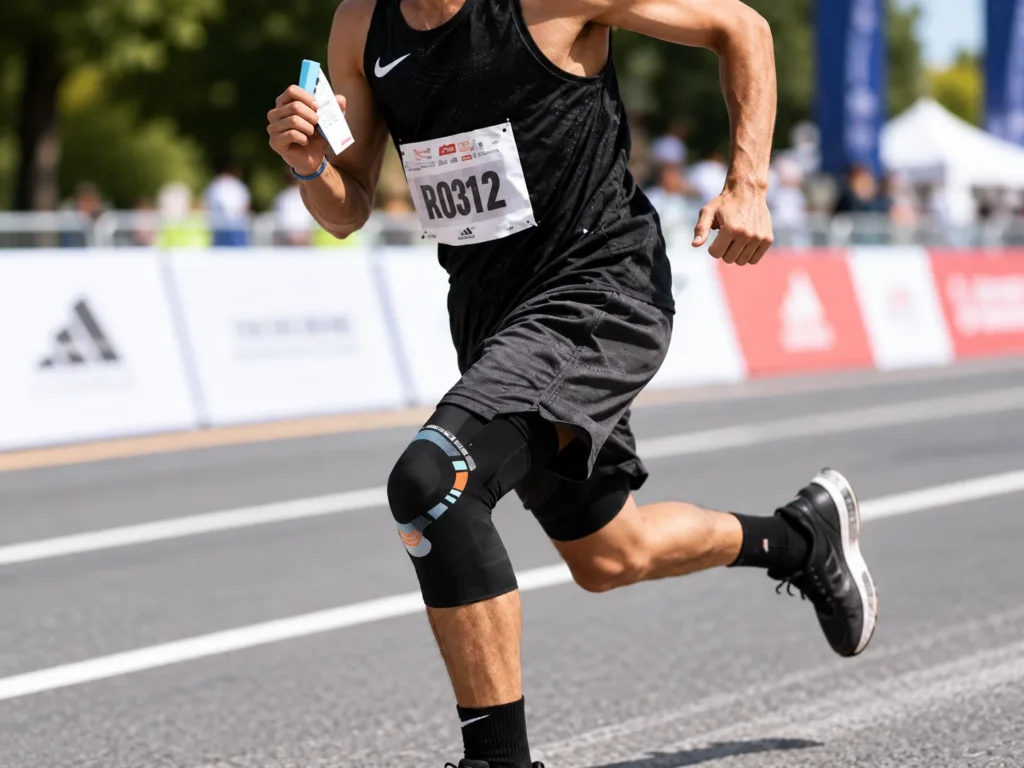
Bauerfeind’s Sports Compression Knee Support uses a lightweight compression knit with silicone grip features. It is the simpler sleeve construction in this comparison, without the shaped kneecap pad found in the Sports Knee Support. See Bauerfeind’s knee support range for the product details.
For runners comparing low-bulk options, this is a useful starting point. Evaluate whether the sleeve remains comfortable when the knee repeatedly bends and whether its upper edge stays in place.
What to check before buying: Follow the model’s measurement instructions. During an appropriate trial, check for rolling, bunching and pressure at the edges.
For B2B buyers: This category makes the quality of the fabric and fit especially important. Request samples across the intended size range and compare stretch recovery, seam finishing and consistency between sizes.
Bauerfeind Sports Knee Support
An option with a shaped kneecap pad
The Sports Knee Support combines compression knit with an anatomically shaped pad around the kneecap. Bauerfeind also describes an upper silicone grip band and its 3D Airknit construction on the official running-support page.
This design is worth comparing when a plain sleeve does not match the required product features. The pad adds another fitting consideration: it needs to sit in the intended position throughout movement.
What to check before buying: Assess the fit around the kneecap, the feeling behind the knee and the position of the upper edge. A more elaborate construction still needs to suit the wearer.
For B2B buyers: When evaluating products in this category, examine pad attachment, alignment and the transition between the pad and surrounding fabric. Define your own product requirements rather than treating a similar appearance as equivalent performance.
McDavid Knee Strap/Patella
An option for targeted support with limited coverage
The McDavid Knee Strap/Patella uses an adjustable hook-and-loop closure and a tubular buttress positioned at the patellar tendon. The manufacturer lists running among its intended activities and specifies that the strap fits either knee. The official product page provides its construction and care details.
A strap leaves much of the knee uncovered. That makes it a different choice from a sleeve for runners who have been advised to use localized support.
What to check before buying: Confirm the correct size and adjustment range. The official page showed the selected variants as out of stock when reviewed, so check availability before planning a purchase.
For B2B buyers: Evaluate strap length, closure engagement and the consistency of the contact pad. Instructions should make the intended position clear without requiring customers to guess from a lifestyle photograph.
Mueller Jumper’s Knee Strap
Another adjustable option for localized support
Mueller’s Jumper’s Knee Strap has a tubular insert and an adjustable fastening. The manufacturer describes it as applying pressure below the kneecap and provides a measurement range for its one-size design. Its official product information also includes a warning that the neoprene blend may cause allergic reactions.
This is another product to compare when the required support is localized rather than distributed around the whole knee.
What to check before buying: Check your measurement against the stated range and review the material warning. “One size” still has fitting limits.
For B2B buyers: Test adjustable products near both ends of their proposed fitting range. Check whether the closure remains secure and whether excess strap material is manageable.
Which Type Should You Choose for Running?
Start with the support requirement
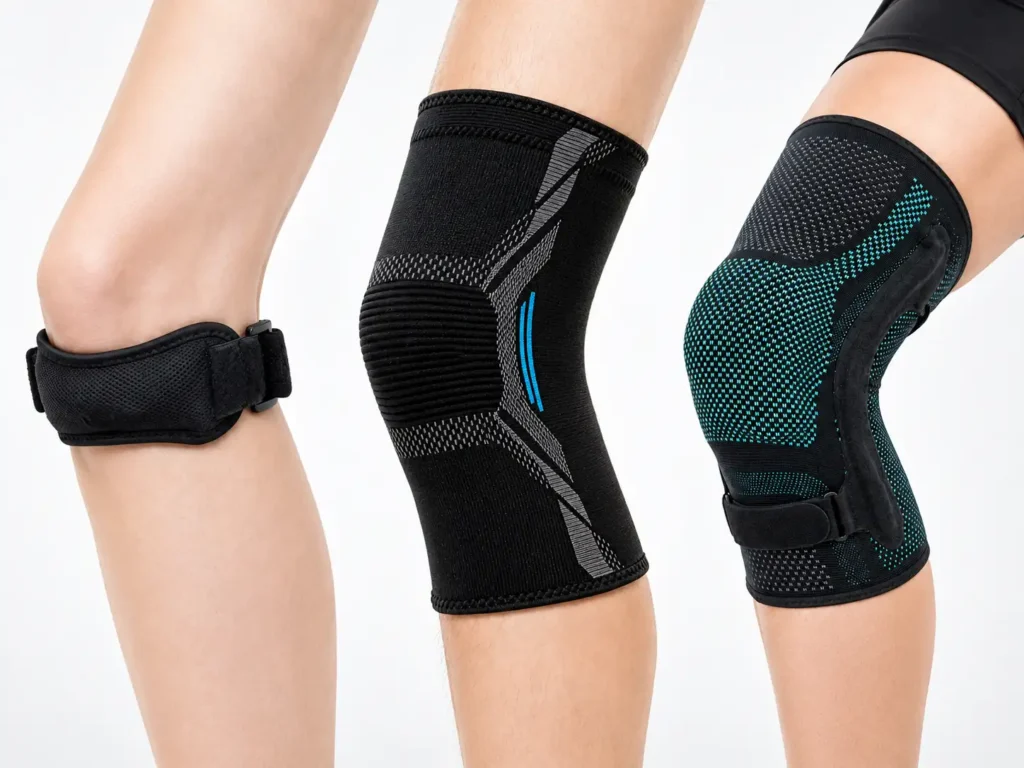
A knee sleeve provides elastic compression, while structured braces can provide additional stability or movement control. A sleeve or strap should not be assumed to replace a brace selected for an injury. Cleveland Clinic explains the different types and purposes of knee supports.
Use the product’s intended function to narrow your options:
- Compression with limited bulk: Compare lightweight sleeves.
- A padded support construction: Compare supports with a shaped kneecap pad.
- Localized tendon support: Consider a strap when appropriate for the individual’s needs.
- Instability or recovery after injury: Seek professional guidance on the required brace and return-to-running plan.
A product marketed for “runner’s knee” is not a diagnosis. Avoid choosing solely because the packaging uses that phrase.
Check fit before increasing distance
A knee support should feel secure without painful pressure. It should not cause numbness, tingling or worsening pain. Seek medical attention for severe pain, worsening swelling or difficulty moving the knee or leg. Cleveland Clinic’s fitting and safety guidance explains these warning signs.
For a runner cleared to exercise, introduce a new support during a short, familiar session before relying on it for a long run or event. Check its position and comfort afterward.
Do not use rigidity as a quality score
A hinged brace is not automatically a better running product because it looks stronger. Braces differ in the movement they allow and the purpose they serve. The appropriate choice depends on the individual’s condition and professional advice.
Likewise, wearing a support does not guarantee injury prevention. Cleveland Clinic notes that braces cannot prevent every injury.
What Brands and Distributors Should Evaluate
For a running-focused product range, each model should have a clear reason to exist. A plain sleeve and a padded support can serve different product requirements; two nearly identical sleeves need a meaningful distinction beyond color.
Before approving a wholesale or private label product, evaluate:
| Purchasing criterion | What to request or inspect |
|---|---|
| Intended use | A clear description of the support’s function and limitations |
| Fit | Model-specific measurement instructions and samples across the size range |
| Movement comfort | Edge pressure, bunching, pad position and strap interference |
| Construction | Fabric composition, seams, closures and attachment of pads or stays |
| Care | Written washing instructions and an agreed sample evaluation after washing |
| Repeatability | An approved reference sample and written production specifications |
| Packaging | Clear sizing, application, material and care information |
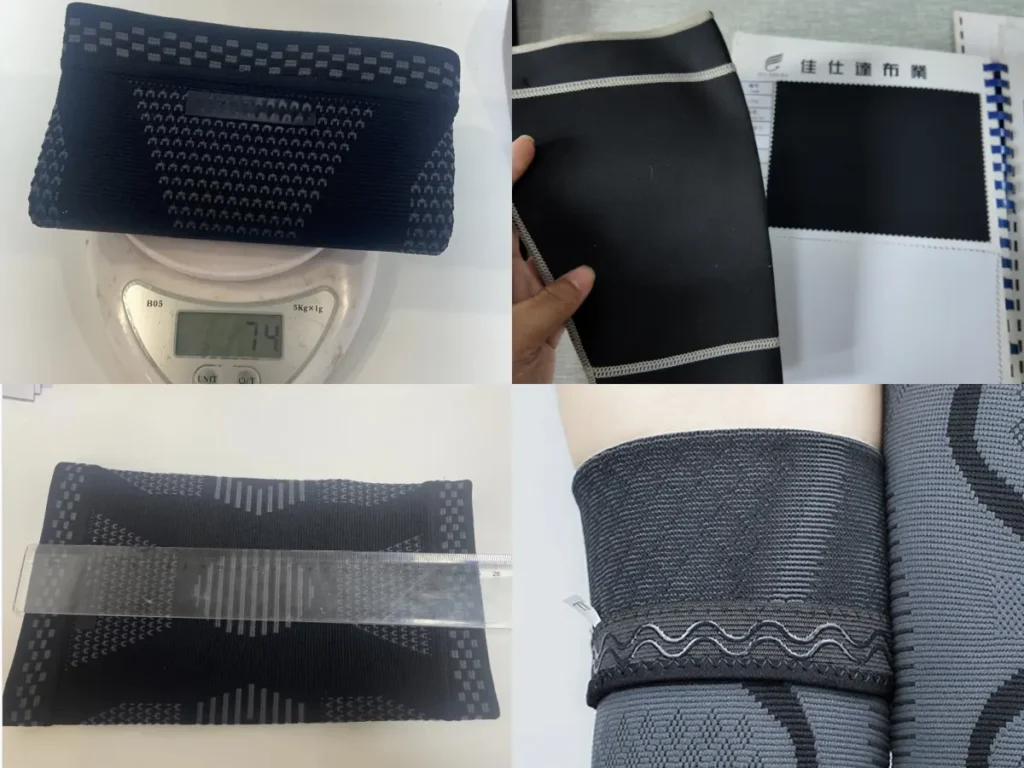
Agree on the evaluation method before comparing suppliers. A photograph can show the design, but samples are needed to assess fit, adjustment and workmanship.
Developing a Running Knee Support Range with Braces for Sports
Braces for Sports serves sports brands, private label sellers, distributors, importers and retail chains through OEM/ODM sports support and medical brace development.
Our customization options include logos, packaging, colors, sizes and material adjustments, alongside sampling and design revisions. Available material options include neoprene, nylon, polyester, spandex, gel and breathable mesh.
For a running-focused project, begin with a brief covering the intended customer, support function, preferred construction, size range and target market. Then use samples to refine fit and comfort before finalizing branding and packaging.
This guide is published by Braces for Sports. The third-party products above are comparison references; no affiliation or equivalent performance is implied.
Planning a running knee support range? Contact Braces for Sports with your product requirements, customization needs and estimated order quantity to discuss samples, flexible MOQ options and a quotation.