
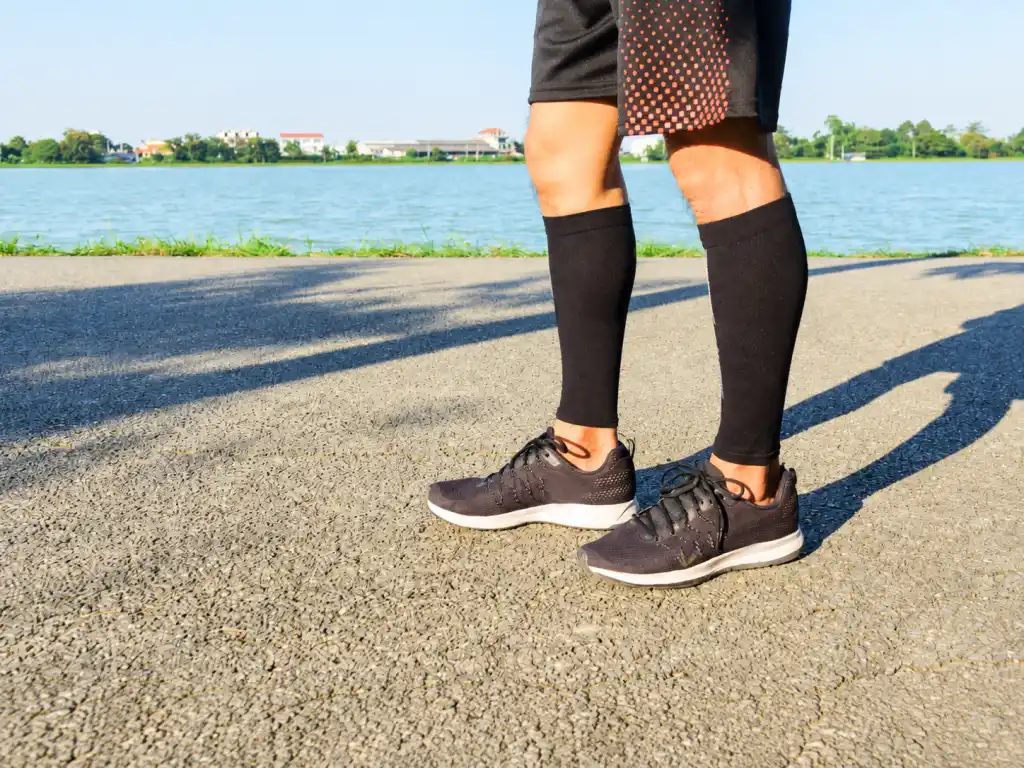
Compression sleeves may help some runners feel more comfortable and supported, but they have not been shown to reliably speed up shin splint recovery. Use them as an optional addition to reducing painful activity and gradually rebuilding training. They cannot correct an overloaded training schedule or replace assessment of persistent shin pain. A randomized trial involving 74 athletes found that adding a sports compression stocking to a graded running program did not significantly shorten recovery compared with the running program alone. Read the clinical trial.
Why Shin Splints Develop
Shin splints, commonly called medial tibial stress syndrome, cause exercise-related pain along the inner border of the shinbone. They often follow an increase in running distance, frequency, intensity, or hill work. Worn footwear and foot mechanics can also contribute.
The central issue is repeated loading that exceeds what the lower leg can currently tolerate. A sleeve adds external compression, but it does not remove the impact of each running stride. AAOS guidance on shin splints.
What Compression Sleeves Can—and Cannot—Do
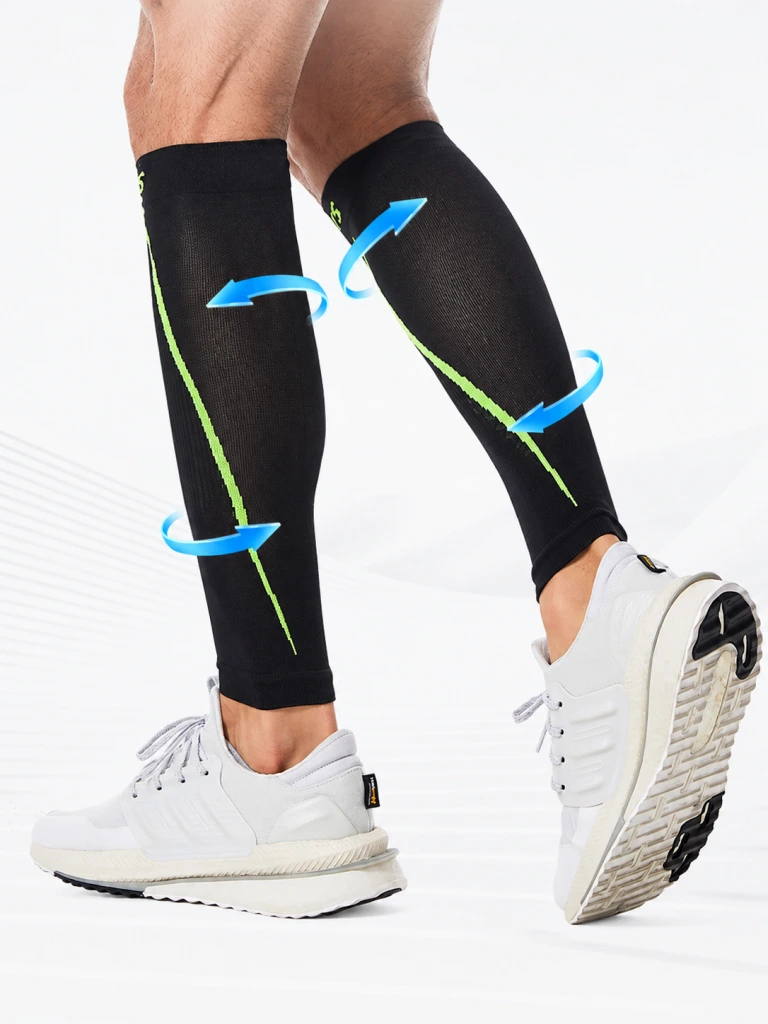
A calf compression sleeve is a footless garment that fits around the lower leg. Its immediate purpose is to provide compression and a close-fitting support sensation.
Some runners find that sensation reassuring during activity. However, feeling better while wearing a sleeve does not establish that the underlying problem is healing faster.
The 2012 clinical trial compared three approaches: graded running alone, graded running with calf exercises, and graded running with a sports compression stocking. Recovery time and treatment satisfaction did not differ significantly between groups. The study tested a particular garment and rehabilitation program; it does not establish identical results for every sleeve design. Study methods and findings.
For runners and sports-product buyers, this distinction matters: comfort, fit, and support are useful product considerations, while faster healing and injury prevention require separate clinical evidence.
What to Do When Your Shins Hurt
Reduce the activity that triggers pain
Pause running or jumping that brings on symptoms. Switch to a lower-impact activity, such as swimming, if it is comfortable. Do not use a sleeve to make a painful training session feel manageable enough to finish.
The NHS recommends stopping the exercise responsible for shin splints and rebuilding activity slowly rather than returning immediately to the previous workload. NHS advice on shin splints.
Review recent training changes
Look back at when symptoms began. Did you add extra running days, longer sessions, speed work, or hills? That change gives you a practical starting point for adjusting training.
Check footwear as well. Shoes should suit the activity and fit properly. Recurrent symptoms may warrant a professional assessment of footwear and foot mechanics. AAOS causes and treatment guidance.
Get persistent or severe pain assessed
Shin pain can also come from a stress fracture, tendinitis, or exertional compartment syndrome. Seek assessment if symptoms persist despite rest, worsen, or become concentrated in a small area. Severe pain requires prompt medical attention. AAOS diagnostic guidance, NHS advice on when to seek help.
| What you notice | What it may indicate | Practical response |
|---|---|---|
| Symptoms began after increasing mileage or intensity | Training load may have risen too quickly | Reduce painful activity and review the recent increase |
| Pain feels easier in a sleeve but returns after running | Comfort has changed while the loading problem may remain | Reassess training rather than increasing distance |
| Pain persists despite reducing activity | The diagnosis or recovery plan needs review | Arrange a clinical assessment |
| Pain becomes sharply localized or severe | Another injury may be present | Stop impact exercise and seek medical advice |
How to Choose a Calf Sleeve for Comfortable Support
Product construction matters when choosing a sleeve, even though no fabric, cuff, or pressure label alone proves effectiveness against shin splints.
Start with measured sizing
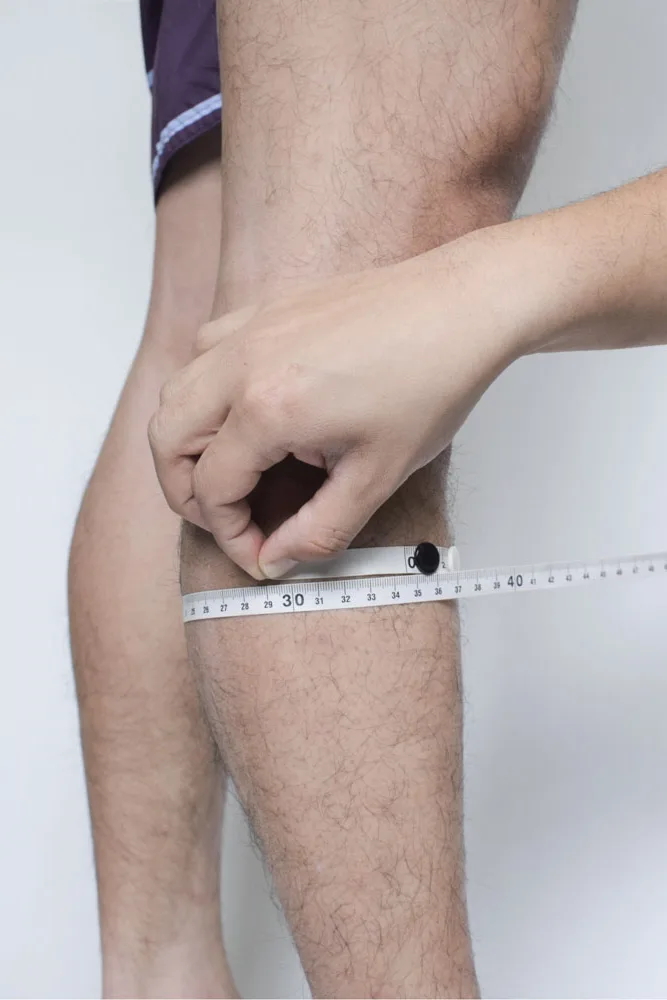
Use the specific product’s size chart and take every requested measurement. Calf circumference and garment length deserve particular attention. Avoid choosing by height, body weight, or a “one size” label alone.
For a private-label range, provide clear measuring instructions and guidance for customers who fall between sizes.
Check the cuffs and seams
A sleeve should sit smoothly without rolling, bunching, or creating a concentrated pressure point. Inspect the top cuff, lower opening, and seam positions during sample fitting.
Silicone grips, knitted cuffs, and shaped construction are different design options. Their suitability depends on the actual garment and wearer; an anti-slip feature does not guarantee a comfortable fit.
Match the construction to the intended activity
Lightweight knitted sleeves, foam calf supports, and adjustable wraps have different wearing characteristics.
| Product format | Main selection consideration |
|---|---|
| Knitted calf compression sleeve | Close fit, fabric feel, ventilation, and compatibility with regular socks |
| Foam or neoprene calf support | Thickness, warmth, flexibility, and seam comfort |
| Adjustable calf wrap | Ease of application, strap positioning, and pressure adjustment |
An adjustable wrap allows the wearer to change tightness, but that does not mean the straps deliver a precisely measured compression level.
Treat pressure ratings as product specifications
A higher mmHg number does not automatically make a sleeve better for shin splints. Ask how the stated pressure was measured, which sizes were tested, and whether the garment delivers uniform or graduated compression.
For wholesale purchasing, request size tolerances, material composition, wash-care instructions, and evidence of pressure retention after laundering. These details help buyers evaluate product consistency without relying on treatment promises.
Compression Sleeves or Compression Socks?
A calf sleeve leaves the foot uncovered, allowing the wearer to use their preferred socks. A knee-high compression sock covers the foot as well as the lower leg.
Choose based on coverage, fit, footwear compatibility, and intended use. Foot coverage alone does not establish which product will produce better shin splint outcomes.
For a sports-support collection, keep footless calf sleeves, compression socks, and adjustable calf braces clearly identified so customers can compare the right product formats.
Can You Keep Running While Wearing Them?
A sleeve should not determine whether you are ready to run. Base that decision on symptoms and a suitable return-to-activity plan.
When symptoms have settled, rebuild exercise gradually. If shin pain returns, stop and reduce the workload rather than tightening the sleeve or buying stronger compression. Seek physiotherapy or sports-medicine advice when symptoms recur or recovery stalls. NHS recovery guidance.
Developing a Calf Support Range for Your Customers
For sports brands, importers, and distributors, a useful calf-support range starts with clear product choices: knitted sleeves for close-fitting sports support, foam supports where warmth is preferred, and adjustable wraps where easier application matters.
Build product information around measurable details—sizing, materials, construction, pressure testing, wash durability, and packaging units. Explain the intended support function clearly and reserve medical treatment statements for products with appropriate supporting evidence.
Planning a private-label calf support range? Contact Braces for Sports to discuss your target customers, preferred construction, sizing requirements, and sample evaluation needs.