
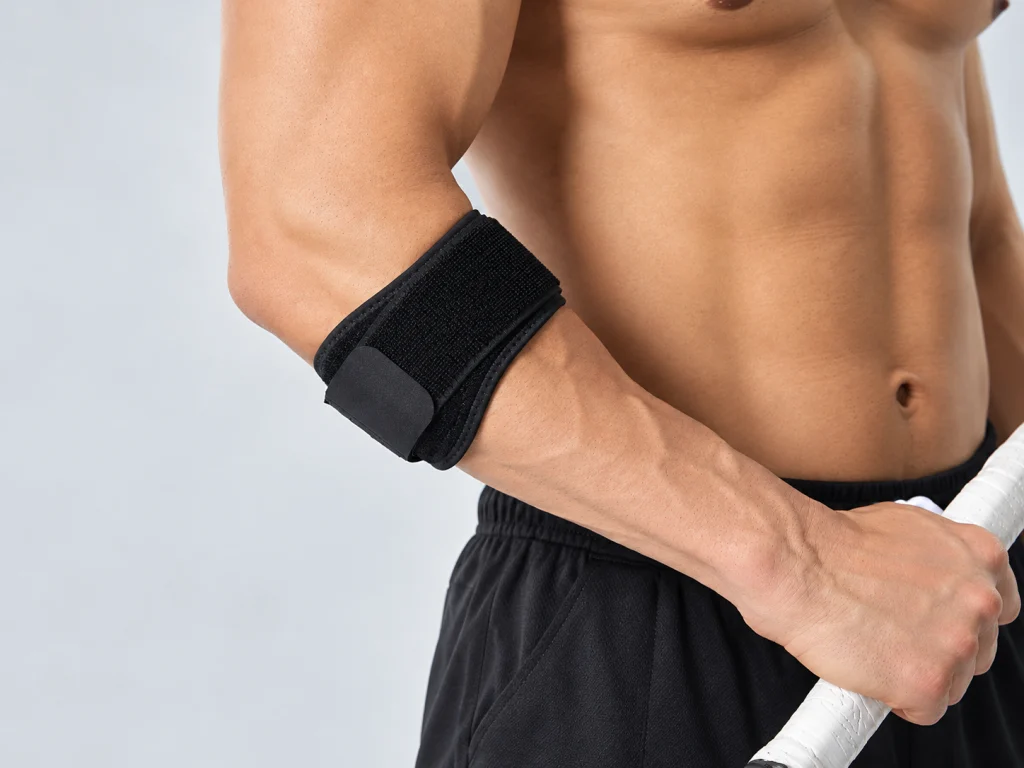
An adjustable counterforce strap is a practical option to consider for tennis elbow symptoms triggered by gripping or lifting. However, no single elbow support is best for everyone. A wrist support may suit some people better, while a compression sleeve offers a different fit and coverage.
The most useful support is one that fits comfortably and makes the relevant activity easier. Clinical guidance allows counterforce straps or wrist supports during activity for immediate symptom relief, but evidence does not establish lasting benefits from bracing alone. APTA clinical practice guideline
For sports brands, distributors, and private-label buyers, this means choosing a clear product purpose before selecting materials, padding, or packaging.
What Should an Elbow Support Do for Tennis Elbow?
Tennis elbow affects the tendons associated with the forearm muscles that extend the wrist and fingers. It commonly causes pain on the outside of the elbow during activities such as holding a racket, using tools, or lifting objects. It can affect people who do not play tennis. American Academy of Orthopaedic Surgeons
A support should therefore be evaluated against a specific task. Does it make light gripping more comfortable? Can the wearer bend the elbow freely? Does it remain in position without excessive tightening?
A product that looks substantial or feels very tight does not automatically provide a better result.
Counterforce Strap, Compression Sleeve, or Wrist Support?
These products support different areas and should have distinct descriptions in a retail or distributor range.
| Support type | Design and purpose | Main selection consideration |
|---|---|---|
| Counterforce forearm strap | A narrow band that applies localized pressure around the upper forearm | Adjustable fit, comfortable pressure, and stable positioning |
| Elbow compression sleeve | A stretch sleeve covering the elbow and surrounding areas | Correct sizing, comfortable coverage, and freedom of movement |
| Sleeve with an adjustable strap or pad | Combines sleeve coverage with an additional pressure feature | Whether the pressure feature stays in the intended position |
| Wrist support or splint | Supports the wrist rather than applying pressure around the elbow | Whether wrist restriction helps the user without interfering excessively with tasks |
The strongest reason to distinguish these options is functional: a plain sleeve does not reproduce the localized pressure of a counterforce strap, and a wrist splint changes wrist movement.
Counterforce Strap: An Option for Activity-Related Symptoms
A counterforce strap leaves most of the arm uncovered while applying pressure around the forearm. AAOS identifies forearm bracing as an option that may help relieve tennis elbow symptoms. AAOS guidance on tennis elbow
For product selection, examine:
- Whether the strap adjusts smoothly across the stated circumference range.
- Whether the closure remains secure during repeated elbow movement.
- Whether the pad and strap edges feel comfortable against the skin.
- Whether the wearer can reproduce the fit using the supplied instructions.
A pressure pad is a design feature to assess, rather than proof that one product performs better than another.
Compression Sleeve: Evaluate Coverage and Fit
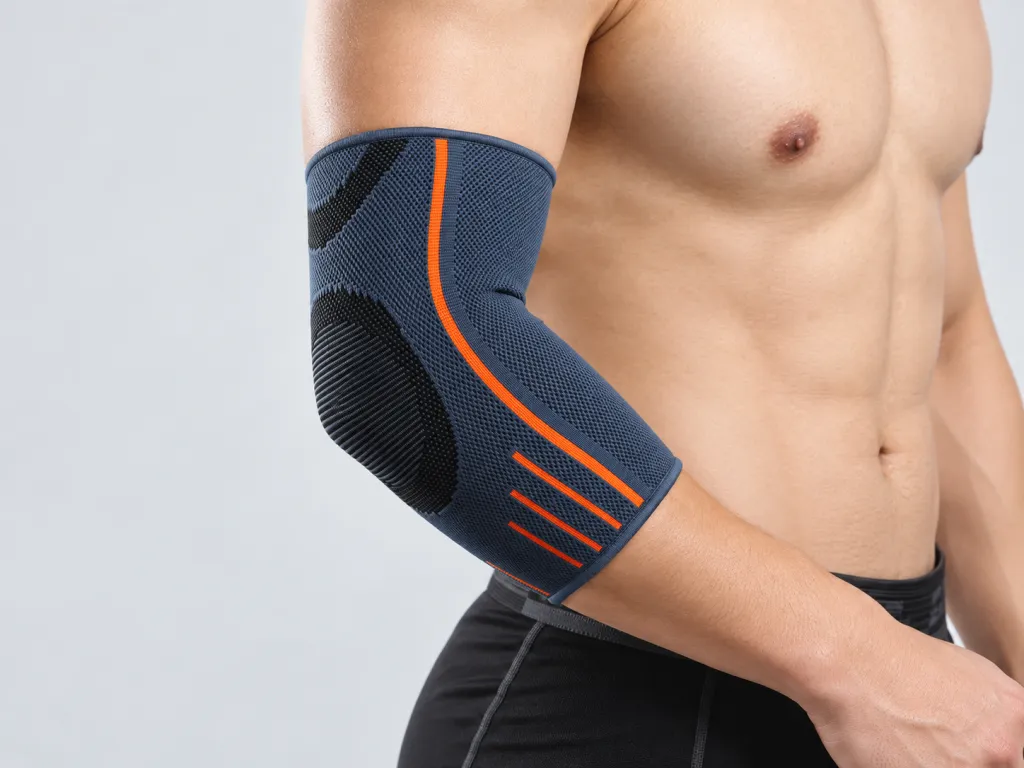
A sleeve may appeal to customers who prefer broader coverage around the elbow. Its suitability depends on the garment’s dimensions, stretch, edge construction, and comfort during movement.
Avoid presenting every compression sleeve as equivalent to a tennis elbow strap. Even sleeves with similar photographs can differ in coverage, knit structure, and pressure distribution.
For a sleeve with an integrated strap or pad, check both components together. The sleeve should fit correctly before the additional strap is tightened.
Wrist Support: A Different Approach Worth Discussing
A wrist support may be considered when symptoms are aggravated by wrist activity. It also introduces a practical trade-off: restricting wrist movement can interfere with gripping and everyday tasks.
Clinical guidance includes both wrist supports and counterforce straps as possible options during activity. Selection should depend on comfort and functional response rather than an assumption that one design is universally superior. APTA clinical practice guideline
How to Choose a Comfortable Elbow Support
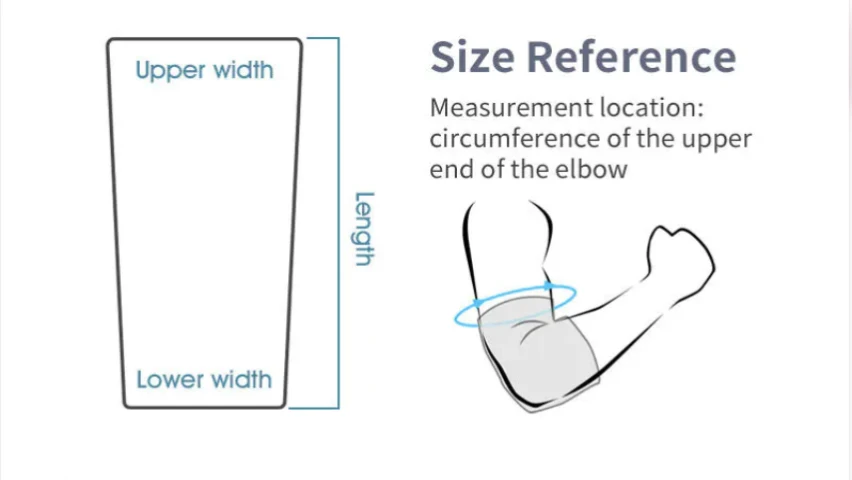
Use the Product’s Measurement Instructions
Measure at the location specified by the manufacturer. A forearm strap and an elbow sleeve may use different measurement points.
For adjustable products, “one size” still needs a defined circumference range. For sleeves, the size chart should correspond to the finished product and explain how to measure.
B2B buyers should request samples across the proposed size range. Testing only a medium sample leaves uncertainty about smaller and larger sizes.
Check Fit During Movement
Evaluate the support while bending and straightening the elbow and performing an appropriate light task.
Look for rolling edges, slipping, bunching, concentrated pressure, or a closure that catches on clothing. A support should remain comfortable without needing progressively tighter adjustment.
Loosen or remove a support if it causes numbness, tingling, skin discoloration, or increasing pain, and seek professional advice if symptoms persist.
Compare Materials Through Samples
Materials affect the wearing experience, but a fabric name alone does not establish product quality.
For example, when comparing a neoprene construction with a knitted or mesh construction, assess the finished samples for:
- Comfort against the skin.
- Heat and moisture during intended use.
- Stretch and recovery after repeated movement.
- Seam and edge placement.
- Cleaning requirements and drying time.
For private-label programs, approve the complete material specification. Terms such as “breathable” and “durable” become more useful when connected to agreed evaluation methods and acceptance criteria.
Prioritize Clear Instructions
A support is easier to use when its packaging explains where it belongs, how to adjust it, and when to stop wearing it.
Instructions should match the actual product. A forearm strap, sleeve, and wrist splint need different fitting diagrams.
Can an Elbow Support Replace Treatment?
An elbow support is one part of symptom management. It should not be presented as a guaranteed cure or a reason to continue activities that worsen pain.
The NHS recommends reducing aggravating activities and lists forearm straps, wrist braces, and elbow braces among self-care options. It advises seeking medical assessment if elbow pain remains after at least two weeks of rest and self-care. NHS tennis elbow guidance
For brands and distributors, customer-facing descriptions should explain the product’s intended support function without promising tendon repair, permanent relief, or a fixed recovery time.
What Should B2B Buyers Specify Before Ordering?
A clear purchasing brief helps turn a broad request for the “best tennis elbow support” into a product that can be sampled and evaluated consistently.
| Purchasing requirement | What to include |
|---|---|
| Product format | Forearm strap, sleeve, sleeve with strap, or wrist support |
| Intended use | Target customer, activity, and desired coverage |
| Fit | Measurement location, circumference range, size chart, and dimensional tolerances |
| Construction | Fabric composition, pad material, closure, seams, and edge finish |
| Sample evaluation | Fit, movement, slipping, closure security, and comfort checks |
| Care | Cleaning instructions appropriate to the approved construction |
| Branding | Logo method, position, colors, and label requirements |
| Packaging | Fitting diagram, size identification, instructions, and barcode |
| Commercial terms | Quantity by size and color, sample costs, MOQ, delivery schedule, and shipping requirements |
| Market documentation | Documents appropriate to the specific product and destination market |
Approve a reference sample and written specification before bulk production. This gives both parties a concrete basis for checking materials, dimensions, assembly, and packaging.
Developing an Elbow Support Range With Braces for Sports
Braces for Sports supports OEM and ODM sports support and medical brace projects for brands, distributors, importers, and private-label businesses. Customization can include materials, sizing, colors, support structures, logos, and packaging, with samples used to review the design before bulk production.
When planning an elbow support range, start with the customer’s intended activity and preferred product format. Then develop the fit, construction, and instructions around that requirement.
For a quotation or sample discussion, contact Braces for Sports with your target market, reference product or drawing, size range, estimated quantity, and packaging requirements.